Grade 10 Geometry Help — Video Lessons & Practice
Get clear explanations for any Geometry problem and build exam-ready confidence.
Value vs. Private Tutor
Affordable Singapore curriculum help online.

Multi-Subject
Stuck on Geometry? Try a new plan tomorrow.
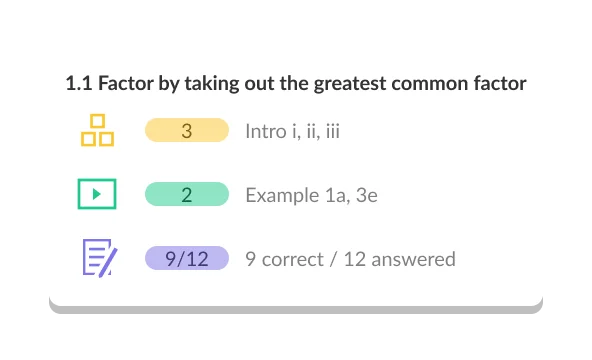
Practice Until Perfect
Keep practicing until it clicks.
Try It Now
Test your knowledge
Our approach aligns with the evidence
Exam Scores
Better Recall
Less Anxiety
Geometry Topics
1. Measuring Systems
2. Surface Area and Volume
3. Points, Lines, Segments, Midpoints and Chords
4. Circles, plane and coordinate
5. Triangles and special triangles
6. Angles and trigonometry
7. Sine Rule and Cosine Rule
8. Bearings
9. Transformations
10. Similarity
11. 2D figures and 3D figures
12. Probability
13. Logic
15. Set Theory
16. Vectors
17 Chapters · 88 Topics · 766 Videos
Discover Our Learning Areas
Explore key subjects and start learning with interactive content.

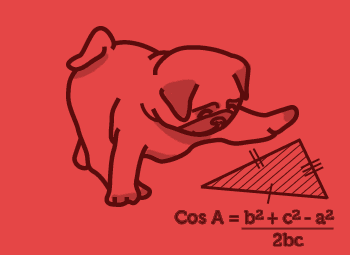
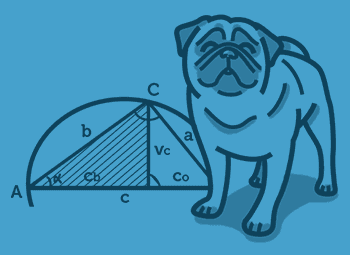

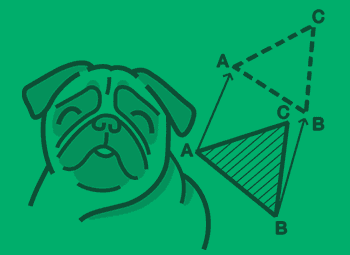
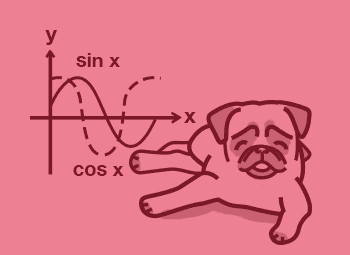

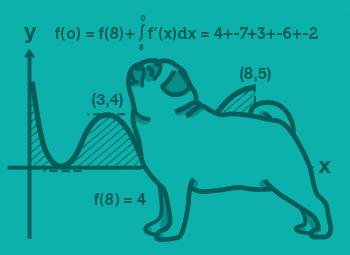
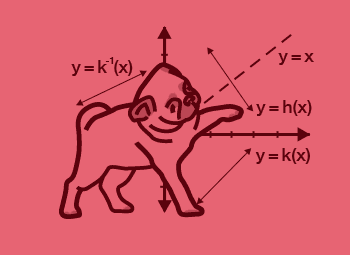
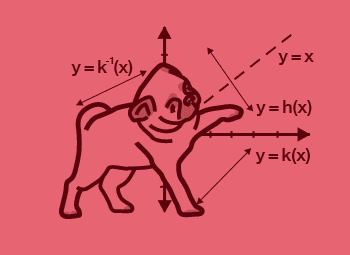

What is Geometry?
Geometry is the branch of mathematics concerned with the properties, measurement, and relationships of points, lines, angles, surfaces, and solids. At Grade 10 in Singapore, Geometry forms a major component of the GCE O-Level Mathematics syllabus — covering everything from circle theorems and congruence proofs to coordinate geometry and 3D mensuration. If you are studying Secondary Three or Four Mathematics, Geometry is not optional background material: it is tested directly across both exam papers and accounts for a significant portion of your final mark.
What topics are covered in Grade 10 Geometry?
The Singapore O-Level Geometry curriculum covers a wide range of interconnected topics. Core areas include:
- Euclidean proofs and angle properties — parallel lines, transversals, angles in polygons
- Congruence and similarity — conditions for congruent and similar triangles, scale factors, area and volume ratios
- Circle theorems — angle at centre, angles in the same segment, cyclic quadrilaterals, tangent-radius, alternate segment theorem
- Coordinate geometry — gradient, midpoint, length of a line segment, equations of straight lines and circles
- Trigonometry — sine, cosine, tangent ratios; sine rule; cosine rule; area of triangle formula
- Mensuration — arc length, sector area, surface area and volume of cones, cylinders, spheres, and composite solids
- Transformation geometry — reflection, rotation, translation, enlargement, symmetry
Each of these areas requires both conceptual understanding and the ability to apply rules precisely under exam conditions — which is why structured video lessons and targeted practice problems are so valuable for Geometry students.
Is Geometry harder than other areas of Secondary Mathematics?
Many students find Geometry uniquely challenging because it demands two distinct cognitive skills simultaneously: spatial/visual reasoning and formal logical argument. Unlike algebra, where you follow a sequence of steps to isolate a variable, Geometry problems often require you to first see a relationship in a diagram and then construct a rigorous chain of reasoning to justify it. This combination of visual intuition and written proof is what makes Geometry feel different from other math topics — and it is why students who struggle with Geometry often improve rapidly once they see a clear, worked example that shows the thought process, not just the final answer. The certified-teacher concept videos on StudyPug are built around exactly this approach: they teach you how to think through a problem, so you can handle unfamiliar variations on the exam.
How is Geometry tested on the GCE O-Level exam?
Geometry questions appear on both papers of the Singapore GCE O-Level Mathematics exam (syllabus 4052). Paper 1 contains short-answer questions where you are expected to apply circle theorems, angle rules, or mensuration formulas quickly and accurately. Paper 2 contains longer structured questions — often multi-part — where a single diagram may require you to chain two or three different Geometry concepts together in sequence. Common Paper 2 question types include: proving that points are concyclic, finding the equation of a circle given geometric conditions, and solving 3D trigonometry problems involving multiple right-angle triangles. Exam markers reward clear, labelled working and correctly stated reasons (e.g. naming the specific circle theorem used). Practising with questions based on the real O-Level exam format is the most direct way to prepare, because the question style and the standard of justification expected are very specific to this syllabus.
Why use StudyPug for Grade 10 Geometry?
StudyPug is built for students who need more than a textbook explanation. Here is what makes it effective for Geometry specifically:
- Diagnostic Assessment: Before you watch a single video, a quick diagnostic identifies the Geometry topics where you are losing marks. You get a personalised study path rather than reviewing everything from scratch.
- Certified-teacher concept videos: Every lesson is recorded by a certified teacher — not AI-generated content. The videos teach the method: how to spot which circle theorem applies, how to structure a congruence proof, how to set up a trigonometry ratio. This is what separates students who can reproduce a memorised answer from students who can handle any exam question.
- Adaptive practice: After watching a lesson, you practise problems that adjust in difficulty based on your responses. If you are getting questions right, the practice moves to harder variations. If you are struggling, it steps back and reinforces the foundation.
- GCE O-Level curriculum alignment: StudyPug's Geometry content is aligned to the Singapore O-Level Mathematics syllabus, so every topic you study here maps directly to what your teacher is covering and what will appear on your exam.
- 30-day money-back guarantee: Every subscription is backed by a 30-day money-back guarantee — the only guarantee StudyPug makes, but it means there is no financial risk in trying full access.
What you learn: Geometry curriculum coverage
StudyPug covers the full scope of the Singapore Grade 10 Geometry curriculum. Whether you are working on the properties of circles, building fluency with trigonometric ratios, or preparing for mensuration questions involving composite 3D solids, every topic is available as a video lesson with accompanying practice problems.
Key curriculum areas covered include congruence and similarity proofs, all nine GCE circle theorems with worked exam-style examples, coordinate geometry of lines and circles, the sine and cosine rules, 3D mensuration, and transformation geometry. The free daily practice content means you can start working on Geometry problems right now, before deciding on a subscription.
Note: No validated internal topic links are available for this page at this time. Visit the main StudyPug Singapore Geometry course page to browse the full topic list.
How to use StudyPug for Geometry
Step 1 — Take the diagnostic. Spend a few minutes on the Geometry diagnostic assessment. It will identify your specific weak points — maybe it is circle theorems, maybe it is the cosine rule, maybe it is coordinate geometry proofs. You get a focused study path immediately.
Step 2 — Watch the concept video. For each weak topic, watch the certified-teacher video lesson. Pay attention to the reasoning process, not just the final answer. Pause and rewind as needed — the video is yours to watch as many times as you need.
Step 3 — Practise adaptively. After the video, work through the adaptive practice problems for that topic. The difficulty adjusts to your performance, so you are always working at the right level — not bored by questions that are too easy, not demoralised by questions that are too hard.
Step 4 — Take a practice test. Once you have covered your weak topics, take a Geometry practice test to simulate exam conditions. Review any questions you got wrong using the video solutions, then repeat until you feel confident.
You can access StudyPug on any device — desktop, tablet, or mobile — so your Geometry practice fits around your schedule, whether that is after school, on the weekend, or the night before an exam. Start with the free daily practice to get a feel for the platform, and use the 30-day money-back guarantee if you decide to go further.
Geometry FAQ
Unsure how StudyPug works? Need help with setting up? Check our frequently asked questions or contact us for help.
What do you learn in Geometry, and what topics does it cover?
Geometry covers the properties, measurement, and relationships of shapes and space. At Grade 10 level in Singapore, key topics include Euclidean proofs, congruence and similarity, coordinate geometry, properties of circles and circle theorems, trigonometry (sine, cosine, tangent ratios), Pythagoras' theorem, mensuration of 2D and 3D shapes, and transformation geometry including symmetry. You also develop logical reasoning skills through structured mathematical proofs — a core skill tested throughout secondary and beyond.
What is the difference between Geometry and Algebra?
Algebra focuses on symbolic manipulation — solving equations, working with expressions, and finding unknown values. Geometry is about visual and spatial reasoning — understanding shapes, angles, distances, and proofs. In practice the two overlap heavily at Grade 10: coordinate geometry uses algebraic equations to describe lines and curves, and trigonometry blends both. Students who strengthen their algebra often find Geometry more approachable, since many proofs and mensuration problems involve setting up and solving equations.
Is Geometry hard, and where do students struggle most?
Many students find Geometry more challenging than earlier math because it requires both visual thinking and precise logical reasoning at the same time. The most common struggle points are circle theorems (memorising and correctly applying the many angle rules), writing formal proofs (knowing how to justify each step), and coordinate geometry (especially finding equations of circles). Trigonometry ratios also trip up students who are not yet fluent with Pythagoras. The good news: these are learnable skills, and structured practice with clear worked examples makes a significant difference.
What should I study before Geometry, and what comes after it?
Before tackling Grade 10 Geometry you should be confident with basic angle properties, Pythagoras' theorem, area and perimeter of standard shapes, and introductory coordinate work (plotting points, gradients, midpoints). These are typically covered in Secondary 1–3 Math. After Grade 10 Geometry, you progress into GCE O-Level and A-Level Mathematics where topics deepen into vectors, further trigonometry identities, complex loci, and calculus-based applications. A solid Geometry foundation makes all of these significantly more manageable.
Is Geometry on the GCE O-Level exam, and how is it tested?
Yes — Geometry is a core part of the Singapore GCE O-Level Mathematics syllabus (4052). It appears across both Paper 1 (short-answer, no calculator) and Paper 2 (structured). Expect questions on circle theorems, congruence and similarity proofs, coordinate geometry, mensuration, and trigonometry. Questions often combine multiple Geometry concepts in one problem and reward clear, structured working. Practising with exam-style questions based on the O-Level format is one of the most effective ways to prepare, because the question style is very specific.
What is one of the hardest concepts in Geometry, and how do you tackle it?
Circle theorems are consistently one of the hardest Geometry topics for Grade 10 students. There are nine or more distinct theorems — angle at centre, angles in same segment, cyclic quadrilaterals, tangent-radius, alternate segment theorem — and exam questions chain several together in one diagram. The best approach is to learn each theorem individually with a worked visual example, then practise spotting which theorems apply from the diagram alone before doing any calculation. Writing the theorem name as a reason in your working also helps lock in the logic and earns method marks.




Written by the StudyPug Team
Last updated June 5, 2026
3 M+
students
★★★★★
4.8 average
K–12
all grades